0
Mica
Mica
Technical glass
Technical glass
Armature
Armature
Special products
Special products
01 Mica
02 Technical glass
03 Armature
04 Special products
Our offer
Product description Technical data Video

Reflex

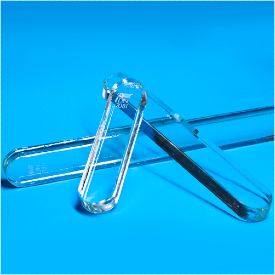
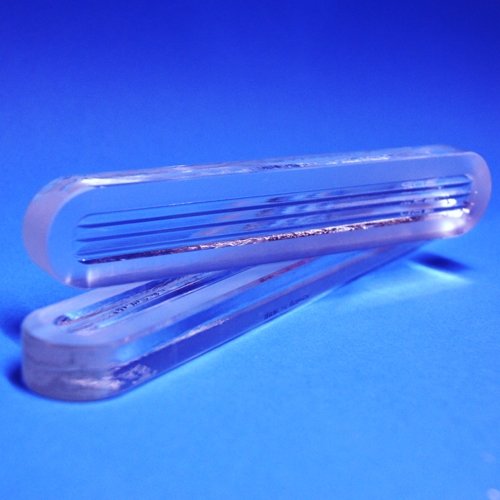
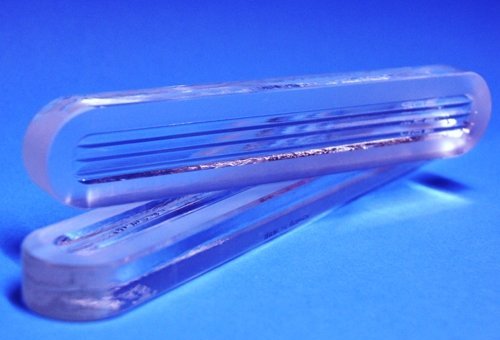
Reflex level gauge glasses offered by us are made by a recognized, global companies like Klinger, Maxos, Spectraglass of high-quality borosilicate("extra hard") or aluminosilicate glasses. Glass in the production process is subjected to a polishing and toughening. This results in products characterized by high mechanical strength and high resistance to alkalis, acids and condensates. In the production process is conducted constant and precise control of transparency and the dimensions of manufactured glass.

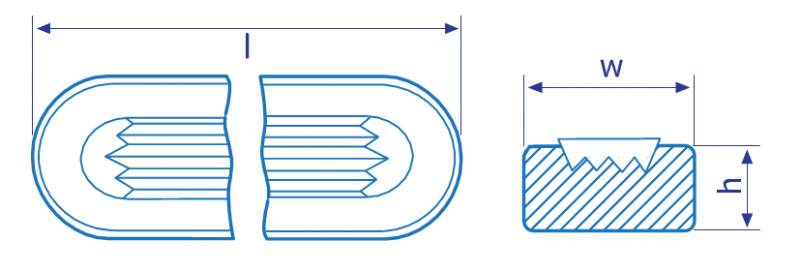
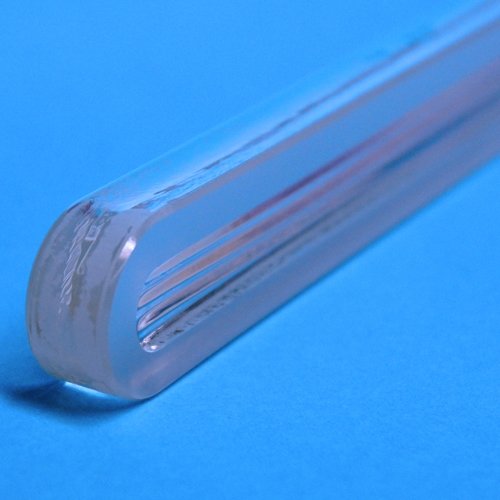
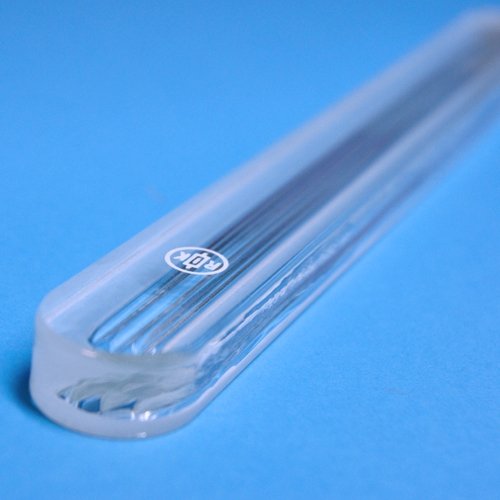
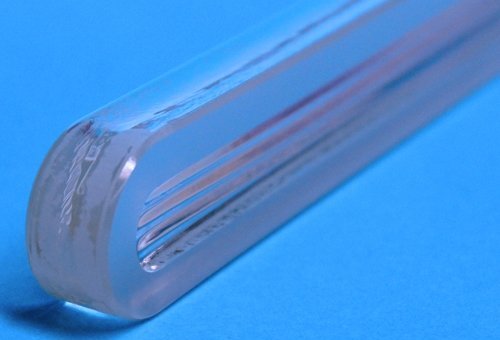
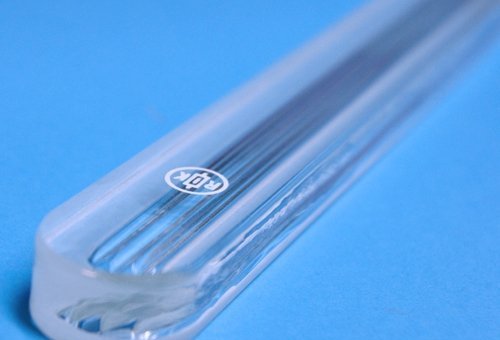
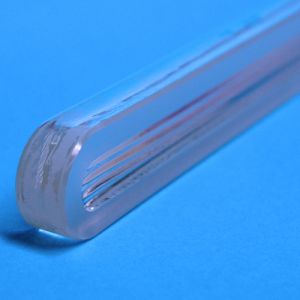
Reflex gauge glasses  are used to read the liquid level directly or with the use of CCTV (industrial television). In this type of glass on the chamber side (medium side) are imprinted longitudinal grooves (3 or 4), which walls are angled to each other at an angle of 90˚. Squeezing process causes the formation of grooves. On the surface of the grooves creates extremely smooth and hard glass layer, very resistant to the environment. With the grooving increases the angle of refraction which makes the visibility of the liquid level is much better than when using smooth glass. For reflective glass does not apply mica shields.

Reflex glasses may be used in pressure up to 35 bar. In this area are sufficiently resistant to the environment. The reading is clear and contrast. In the case of factors other than steam reflex glasses may be used up to 400 bar or 400˚C.

Depending on the width and thickness there are three basic types of transparent level gauge glasses:

  • type A - width 30 mm, thickness 17 mm
  • type B - width 34 mm, thickness 17 mm
  • type H - width 34 mm, thickness 22 mm

In addition, the occasionally encountered also:

  • Type C - width of 20 mm, thickness 12 mm
  • Type D - width 25 mm, thickness 15 mm

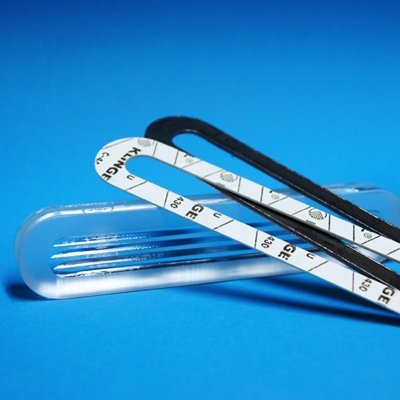
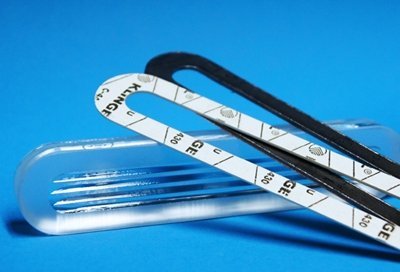
Reflex level gauge glasses are supplied in sets with gaskets or separately.

We offer transparent glass meet the following standards:

  • ÖNORM M 7354 (Austrian standard)
  • DIN 7081 (German standard)
  • JIS B 8211 (Japanese standard)
  • ÖMV-Spez. H 2009 (factory standard of the Austrian petrochemical concern ÖMV-AG, Vienna)
  • MIL-G-16356 D (regulations the US Navy)
  • Esso Eng. Spec. 123 (Esso Research and Engineering Co. - New Jersey)
  • S.O.D. Spec. 123 (Standard Oil Development Company - New Jersey)
  • BS 3463 (British Standard)


Note: transparent level gauge glasses are supplied in sets with gaskets or separately.


If you can not find the size - please contact us.


While every attempt has been made to verify the source of the information, no responsibility is accepted for accuracy of data.

Scope of application:

  Type A Type B Type H
[bar] [°C] [bar] [°C] [bar] [°C]
For soft environment,  not affecting aggressive on the glass ie. oils, hydrocarbons, etc. 400 120 265 120 300 120
150 400 180 400 200 400
0 - 10 430 0 - 10 430 0 - 10 430
For aggressive environment acting on the glass, eg. saturated steam, hot water, alkalis 35
243 35
243 42 253


Dimensions:

Size TYPE A TYPE B TYPE H
L W H L W H L W H
0 95 30 17 95 34 17 - - -
I 115 30 17 115 34 17 115 34 22
II 140 30 17 140 34 17 140 34 22
III 165 30 17 165 34 17 165 34 22
IV 190 30 17 190 34 17 190 34 22
V 220 30 17 220 34 17 220 34 22
VI 250 30 17 250 34 17 250 34 22
VII 280 30 17 280 34 17 280 34 22
VIII 320 30 17 320 34 17 320 34 22
IX 340 30 17 340 34 17 340 34 22
X - - - 370 34 17 - - -


Contact form
Transparent
Transparent
Transparent
    Type A Type B Type H Type TA 28 3) [bar] [°C] [bar] [°C] [bar] [°C] [bar] [°C] For soft environment,  not affecting aggressive on the glass ie. oils, hydrocarbons, etc. 240 120 290 120 340 120 - - 160 400 800 400 230 400 - - 0 - 10 430 0 - 10 430 0 - 10 430 - - For aggressive environment acting on the glass, eg. saturated steam, hot water, alkalis 35 1) 243 35 1) 243 42 1) 253 120 2) 324 70 300 85 300 85 300 180 356   1) For steam pressures above 35 bar is recommended to use mica shields.2) For steam pressures above 120 bar can be used only glasses TA-28-I.3) Glass type TA 28 can be used only with mica shields.   Dimensions:   Size TYPE A TYPE B TYPE H TYPE TA 28 L W H L W H L W H L W H I 115 30 17 115 34 17 - - - 113 27,6 16,8 II 140 30 17 140 34 17 140 34 22 - - - III 165 30 17 165 34 17 165 34 22 163 27,6 16,8 IV 190 30 17 190 34 17 190 34 22 188 27,6 16,8 V 220 30 17 220 34 17 220 34 22 218 27,6 16,8 VI 250 30 17 250 34 17 250 34 22 248 27,6 16,8 VII 280 30 17 280 34 17 280 34 22 278 27,6 16,8 VIII 320 30 17 320 34 17 320 34 22 318 27,6 16,8 IX 340 30 17 340 34 17 340 34 22 338 27,6 16,8 X - - - 370 34 17 - - - - - -   Note: transparent level gauge glasses are supplied in sets with gaskets and mica shields or separately. If you can not find the size - please contact us.   While every attempt has been made to verify the source of the information, no responsibility is accepted for accuracy of data. Transparent level gauge glasses offered by us are made by a recognized, global companies like Klinger, Maxos, Spectraglass of high-quality borosilicate ("extra hard") or aluminosilicateglasses. Glass in the production process is subjected to a two-sided polishing and toughening. This results in products characterized by high mechanical strength and high resistance to alkalis, acids and condensates. In the production process is conducted constant and precise control of transparency and the dimensions of manufactured glass. Transparent (smooth) level gauge glasses  are used to read the liquid level directly or with the use of CCTV (industrial television). They can be (type TA 28) used up to 180 bar / 356°C for aggressive environments affecting (interacting) the glass (eg. saturated steam, hot water, alkalis) and up to 300 bar / 400°C for soft environments. Glass must be protected from the medium side through the mica shields. They are especially recommended for environments contaminated, viscous and highly corrosive. Depending on the width and thickness there are four basic types of transparent level gauge glasses: type A - width 30 mm, thickness 17 mm type B - width 34 mm, thickness 17 mm type H - width 34 mm, thickness 22 mm type TA 28 - width of 27.6 mm, 16.8 mm In addition, the occasionally encountered also: Type C - width of 20 mm, thickness 12 mm Type D - width 25 mm, thickness 15 mm Transparent level gauge glasses are  supplied in sets with gaskets and mica shields or separately. The set, packaged in a common box, consists of: box set of washers  gasket mica shield for the media side mica shield for the place of observation(with a hole Φ ca. 1 mm) installation guide   In all TA-28 sets, soft washers and protective washers are made from graphite foil. In set TA-28-I gasket is made from graphite laminate KlingerGraphite type SLS (see desc. here), but for sets TA-28-III .. TA-28-IX KlingerGraphite type PSM is used (see desc. here). In sets type A, B, H all washers are made from KlingerSil plate type C-4430 (see desc. here), but gaskets are made from graphite laminate KlingerGraphite type SLS (see desc. here).   It is good to know, that the role of the mica shield installed on the outside (ie, on the side of the viewer) is to reduce the thermal shock to which gauge glass is exposed, working on the one hand, in an environment of high temperature (steam, hot water), and on the other, with a low (room) temperature environment. Outer mica shield helps to a longer faultless operation of the set. The hole made in the shield, protects against moisture staying between the glass and mica while mounting assembly and relieves pressure above and below the shield during normal operation. box: set of elements: installation guide:   We offer transparent glass meet the following standards: ÖNORM M 7354 (Austrian standard) DIN 7081 (German standard) JIS B 8211 (Japanese standard) ÖMV-Spez. H 2009 (Austrian factory standard of the petrochemical concern ÖMV-AG, Vienna) MIL-G-16356 D (regulations the US Navy) Esso Eng. Spec. 123 (Esso Research and Engineering Co. - New Jersey) S.O.D. Spec. 123 (Standard Oil Development Company - New Jersey) BS 3463 (British Standard) We also provide glass unusual: manufactured according to individual customer technical requirements, custom sizes and custom shapes.
Longitudinal sight glass fitting type 330 PN 16/40  For welding in or on
Longitudinal sight glass fitting type 330 PN 16/40 For welding in or on
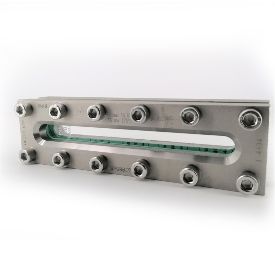
Screws Cover frame Glass cushion Sight glass Gasket Base frame The ACI sight glass of type 330 is used for reliable observation of the liquid level in closed containers such as boilers, tanks, or silos. It is a rectangular vertical sight glass that can be either welded into the container wall or attached by welding. The fitting is equipped with a sight glass plate made of high-quality borosilicate glass according to DIN 7081 (or comparable). This is securely framed between gaskets and tightly screwed to ensure permanent sealing and high pressure resistance. Standardly, the sight glass type 330 is made of stainless steel 1.4571 (316Ti) – a material characterized by high corrosion resistance and durability. Upon request, the design is also available in many other materials, suitable for specific requirements and applications. The sealing of the fitting is done with flat gaskets tailored to your needs from an extensive range of materials. In addition to the common fiber material gaskets, more sophisticated materials such as PTFE (Teflon®), NBR, novaphit® MST-XP, KlingerSil® C4400, and many other branded gaskets are also available. If the maximum operating temperature of borosilicate glass according to DIN 7081 does not meet your requirements, or if the process conditions pose a problem even for the highly resistant borosilicate glass, a mica protection disc specially adapted for the fitting provides additional protection against temperature and steam. FEP or Halar® coatings also additionally protect the borosilicate glass from aggressive chemicals or alkaline solutions. For applications in poorly lit containers, the use of a reflex sight glass according to DIN 7081 (or comparable) is recommended. These glasses are embedded with special prism structures that break and reflect the incoming light – thus, the filling level can be recognized much better. If, however, the container is well-lit, the medium is very clear, or if the color of the medium should remain visible, a transparent sight glass is the better choice. It allows for an unaltered view and precise optical control of the contents. Important note: Reflex sight glasses cannot be combined with mica discs and coatings, as the protective mica layer prevents the light refraction necessary for reflection. Transparent glasses, on the other hand, can easily be equipped with mica discs, FEP, or Halar® coatings, which is particularly recommended for protection of the glass in the case of aggressive media or high temperatures. Cross-sectiondrawing Dimensions BL [mm] 140 170 220 250 300 310 350 370 400 500 600 620 700 740 800 930 1000 SL [mm] 79 124 174 204 264 264 304 324 354 454 564 564 654 694 754 884 954 Concealed view [mm] 0 0 0 0 0 0 0 0 0 1x46 1x36 1x46 1x46 1x46 1x46 2x46 3x46 h1/h2 [mm](PN 16) 20 20 20 20 20 20 20 20 20 20 20 20 20 20 20 20 20 Weight [kg] (PN 16) 2,8 3,2 4,0 4,6 5,3 5,6 6,3 6,6 7,1 9,1 10,7 11,1 12,5 13,2 14,2 16,7 18,2 h1/h2 [mm](PN 40) 25 25 25 25 25 25 25 25 25 25 25 25 25 25 25 25 25 Weight [kg] (PN 40) 3,4 4,0 5,0 5,7 6,6 6,9 7,8 8,2 8,8 11,3 13,3 13,8 15,6 16,4 17,7 20,8 22,6  
Message
Message